Module · 5 lessons
Randomness, from coin flips to the bell curve
Five interactive lessons, in order. Each one is a single idea you can poke; together they build from "a coin flip" up to why the bell curve is everywhere and how evidence should change your mind. Do them top to bottom.
Start with the most basic fact about randomness: even pure chance has structure you can measure.
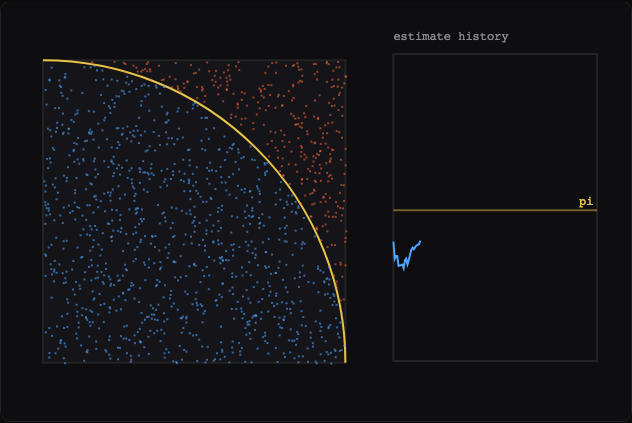
Monte Carlo π
Throw random darts at a square; the fraction landing in a circle estimates π. Randomness can compute.
One draw is unpredictable. But what happens when you take many independent random steps in a row?
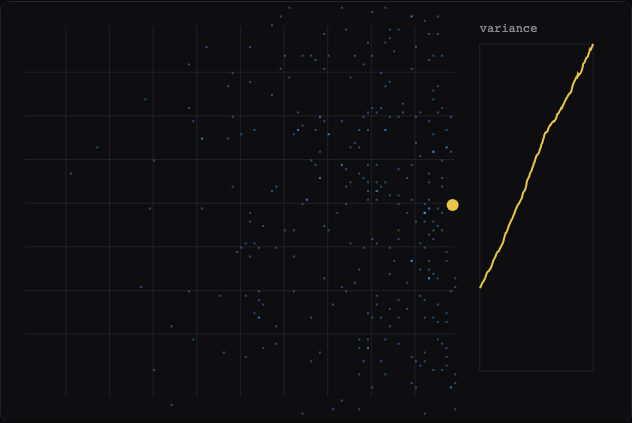
Random Walk
Independent ± steps don't cancel to nothing — they spread into a widening, predictable cloud.
Drop those steps through a lattice of pegs and the spread takes on a specific, familiar shape.
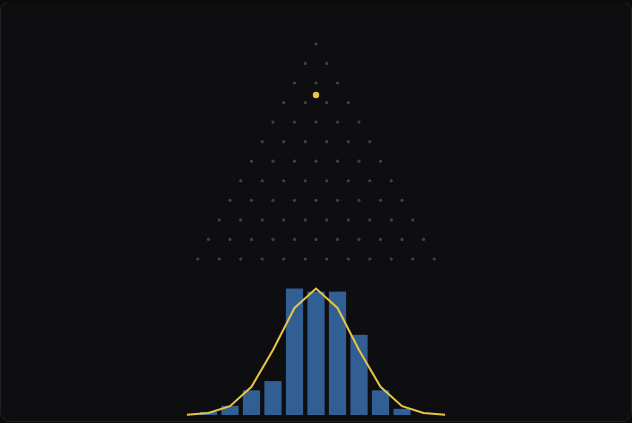
Galton Board
Thousands of coin-flip paths pile into a bell curve. Run the experiment and watch it emerge.
The Galton board hints at something universal. Why does that exact curve keep showing up?
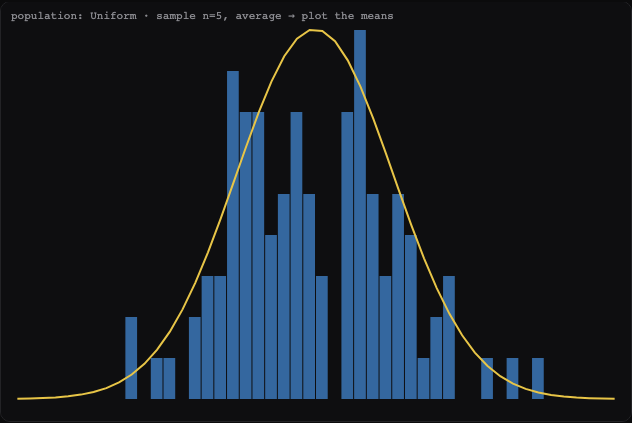
Central Limit Theorem
Average enough samples from any shape and the averages become a bell curve. The deep reason it's everywhere.
Now that you trust the math of chance, use it to reason: how should a piece of evidence actually change a belief?
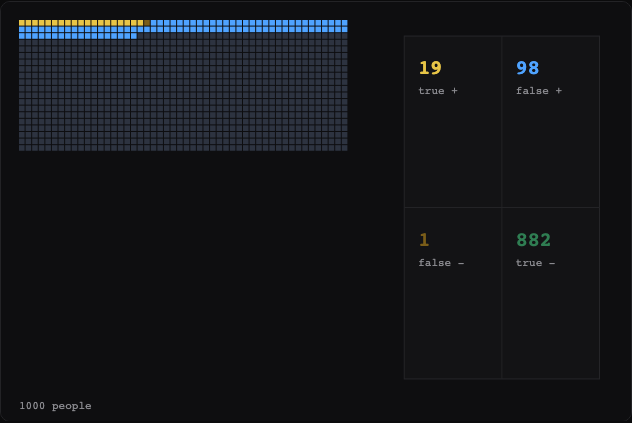
Bayes & Base Rates
A 99%-accurate test for a rare disease is usually wrong when positive. See why the base rate dominates.
Want more? Gambler's Ruin and the Birthday Paradox are good follow-ons. Back to all sims.